

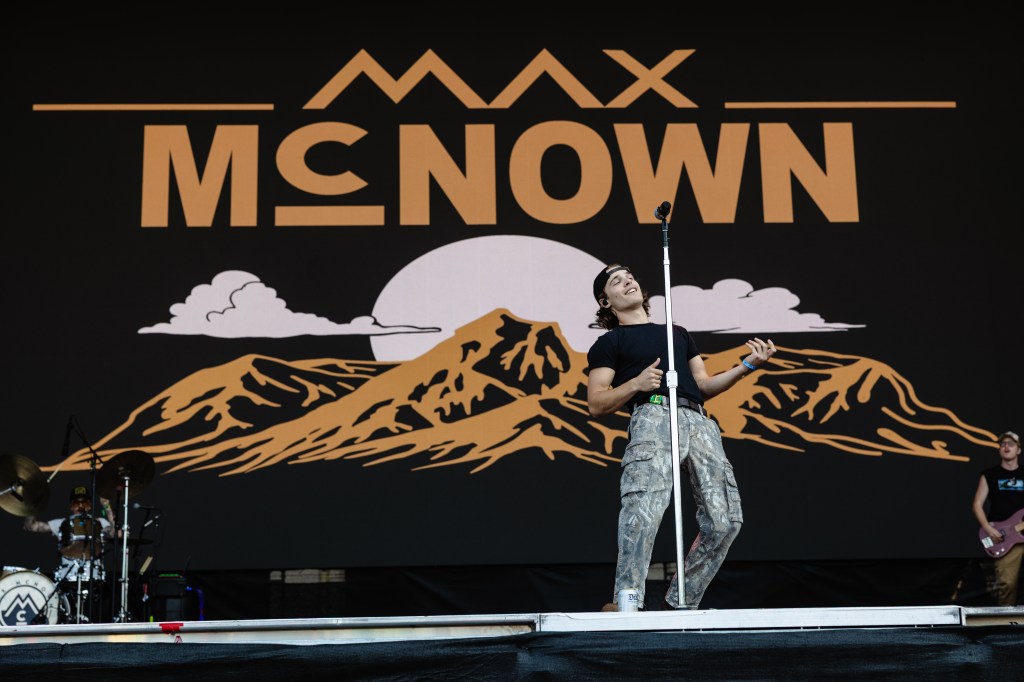
We interviewed rising folk-country star Max McNown at Lollapalooza, where he played several sets in Chicago over the long festival weekend.
Max McNown is an artist that is transcending genres and paving a lane of his own in the music industry. His music blends country influences from artists such as Zach Bryan and Tyler Childers along with the acoustic folk pop sound made popular by Noah Kahan.
His latest album Night Diving (The Cost of Growing Up) follows his debut album Wandering, which features radio hits “A Lot More Free” and “Love Me Back”. McNown’s songs have a strong emotional feeling with deeply personal lyrics. While his music might often be featured on country playlists and radio stations, he continues to establish a unique folk-country sound that reflects his upbringing in Bend, Oregon matched with his current home in Nashville, Tennessee.
Lollapalooza weekend [event review] started on Friday night for Max, with an official aftershow at the intimate Reggie’s Rock Club. He then made his Lolla debut on the T-Mobile Stage Saturday afternoon, followed by a more exclusive set on the other side of the park at Bud Light Backyard.
We interviewed Max on Saturday before his set on Lollapalooza’s main stage. He’s an artist with a distinct sound who has enjoyed a rapid rise to the top levels of the music industry. Read and watch our full Max McNown interview below.
You just played an official Lollapalooza afterparty at Reggie’s last night – tell us about that show and how it compares to your show today. Also thinking of the last time you were in Chicago, how has your career grown?
First, the Reggie’s show. I would kinda describe it as a boutique experience. It’s not a huge room, and Hollister, who I’m partnered with, decorated it to the nines and made it so cool. It was really enjoyable. It was just under 400 people, so kind of more intimate than some of the stuff that I’m doing now.
Last time I played in Chicago before that was at Schuba’s Tavern, which I think is about 250-300 capacity. Things are just growing, and they’re growing fast. Luckily I have a really good support system. So when going from playing at Schuba’s to playing the main stage at Lollapalooza, the crowds are changing, but my inner circle isn’t. It’s full of family and people that care about who I am as a person, not just an artist.
How important is it for you to have that support system? You’ve had such rapid growth in your career. What are some strategies that you use to stay grounded?
When I can, I try to disconnect from music. Whether it’s hiking or video games or visiting my family in Oregon, I try to do things that remind me that I’m not just music. Once your passion becomes your life, you have to find other passions, or you’ll burn out. I would say the support system is potentially the number one most important thing for me, because without it, I would definitely have lost myself. I feel like this career is so consuming if you let it be.
You’re originally from Bend, Oregon and you’re based in Nashville now. How do you think your personal background is reflected in your music?
I take any chance I get to reference Oregon and my home in the Northwest, or Washington, or even some California references. I just try to write about things that are real to me. “St. Helen’s Alpenglow” is Mount St. Helen’s. I reference Manzanita, which is one of my favorite beaches in Oregon. I mention Catalina Coastline in “Forever Ain’t Long Enough”.
I think it’s something that’s really valuable to me and separates me from a lot of the folk/country-ish genre that’s going on right now. There are a lot of Oklahomans and Texans and artists that are born and raised country. I’m an Oregon suburban kid that was raised on country music. It’s kind of a mesh, and in my opinion, it makes me stand out a little bit and I try to lean into it. When I’m writing my songs, I think, what’s something from my past that I can reference here to make it as authentic as possible? So that’s where you hear my hometown and upbringing in my music.
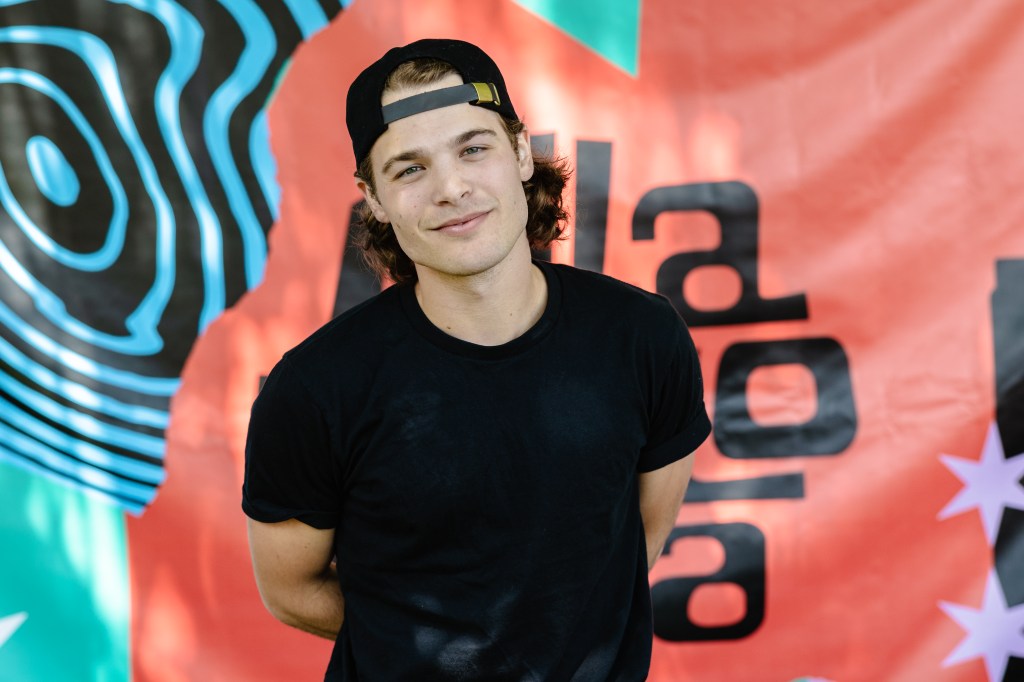
You’re basically in a lane of your own. You have a recent collaboration with Cameron Whitcomb, who is also kind of doing his own thing. Who are some of your biggest influences and inspirations in the music scene?
There’s different aspects of my career that are inspired by different people. Lyrically, Noah Kahan is one of the greatest writers of our time. I take a lot of inspiration from him and the way he writes his songs. It seems like he’s never afraid to write something weird, but it always works. I always reference this line in his song “Growing Sideways”: ‘So I took my medication and I poured my trauma on some sad eyed, middle-aged man’s overpriced new leather couch’. Which is just insane! Nobody writes that, but it’s so creative, and it sets him apart. I take a lot of inspiration from that.
And then as far as writing poetry over simple chords, Zach Bryan and Tyler Childers are huge inspirations for me. You can tell they’re putting music to poetry, and that’s what I try to do.
You just had your deluxe album Night Diving (The Cost of Growing Up) come out two weeks ago, which followed your debut Wandering. What do you think makes Night Diving special and differentiates from your first album?
How Night Diving compares to Wandering – it’s just a further progression into who I am and who I want to be as an artist. Wandering I was kind of figuring myself out, and I named it Wandering because of that. It was like, I didn’t know where I was walking, but I was entering the music career headfirst, just writing songs, a bunch of songs, constantly.
I didn’t know where I was gonna land, and like you said, I’m kind of in a lane of my own now. At the beginning, if you listen to Wandering, there’s a lot more of that country dynamic. But as I got more into that Noah Kahan influence, Night Diving (The Cost of Growing Up), that album is more of that folk-country to folk-pop space. I’m just trying to evolve, and the more I figure out about myself and learn about what feels right, the closer I’m gonna get to being my authentic self, which is always the goal.

You briefly mentioned California, and you were busking on the pier out there just a couple of years ago. Can you walk us through your story? I’m sure you get that question all the time, but what’s it like to perform at a festival like this today?
It is a story that I’ve definitely told a lot, so I hope I don’t repeat myself word for word. I moved to Southern California, things in Oregon were just not feeling right. I didn’t feel like I was who I wanted to be. I was hitting a capacity that I couldn’t handle much more and I had to change something.
So I moved to Southern California and didn’t plan on playing guitar or singing at all. But my dad gave me his old guitar on the way out. And he just said, people like someone who can strum. You should learn a few chords. I was like okay, I’ll try. So I taught myself a few chords. I wrote a few pieces of poetry over some strings that make certain sounds I liked. I didn’t know how to play at all.
But I played that poetry – I call it poetry because calling it a song is probably not accurate. It’s just a few lines of a chorus.
But it’s got that emotion, right? It tells a story.
Yes, exactly. And that’s what Zach Bryan and Tyler Childers did, and that’s why they were so inspiring to me. I showed it to a friend of mine, his name’s Jordan, and he was super encouraging. He just told me it was good enough, and that I could actually do something with this career in music. My self-esteem was in the gutter, I had no courage to try to do it.
But he said if not for you, then do it for me! Go down to the pier and just sing for people. And at the best case scenario, nobody cares, and at the worst case scenario, nobody cares. And that’s the mindset you should go in with. That was enough to get me to do it. Because I wasn’t putting so much pressure on myself. I went down and just played for people.
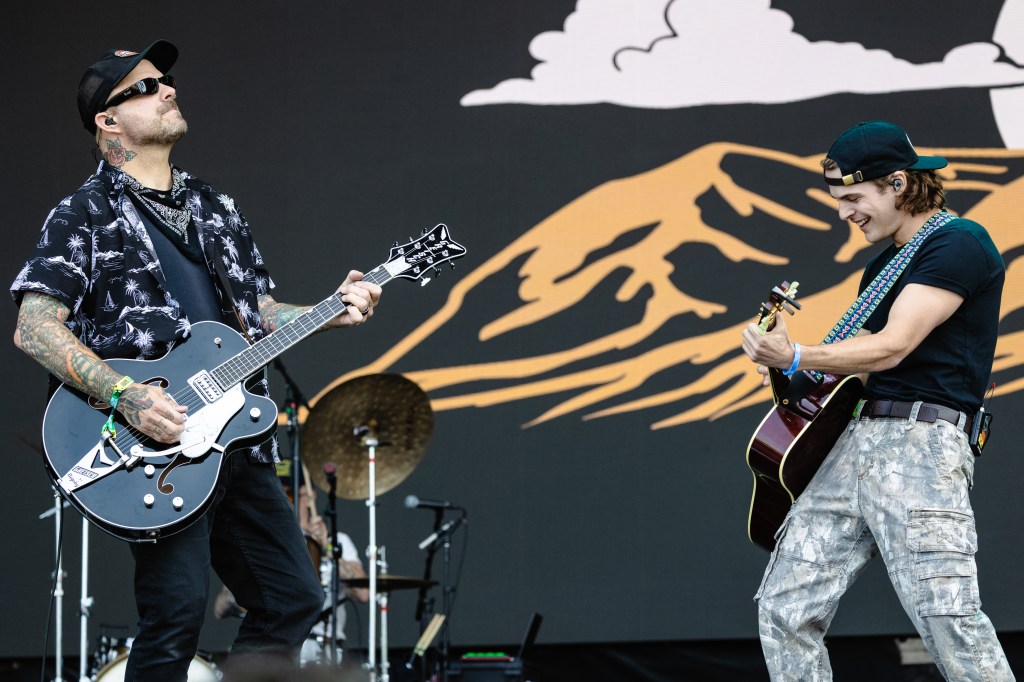
Street performing, to this day, is still some of the hardest performances that I’ve ever accomplished. Playing here, I’m really excited, and I have my full band. There’s a lot of security in that on stage. When you’re playing with a full band, it’s kind of easier to just view each crowd, where it doesn’t matter if there’s 50 or 100 or 80,000 in the crowd. Your job is the same, and you have your friends that you love and care about. You’re all just having a good time on stage.

And they believe in you and your vision.
And I believe in them and I trust them. And they have a job to do, and I have a job to do, and we have a service to provide to the fans. So honestly, it’s not too much more difficult than street performing. Going by yourself and signing for people that might not even want to hear you and definitely don’t know who you are is really scary!
So is that when you wrote “Love Me Back” and “A Lot More Free”? That was kinda my next question, about the emotional weight of your songs. How important is it for you to have that emotional impact in your music?
I think those songs were the entry into treating writing sessions like therapy sessions. That’s why I named the album Night Diving (The Cost Of Growing Up). Night diving represents digging into the darker parts that are more difficult to approach. I had an experience where I actually went night diving in The Bahamas. It was just me and two other people underwater. Pitch black, the deepest darkness you’ve ever felt in your life. And you just have these flashlights. I went on six daytime dives, and I did one night dive and I saw things like squids and lobsters that are the size of my arm, and creatures that you just never see.
So that was the metaphor that inspired the album. You need to dig into the darker parts of yourself to learn things about yourself. So that’s what “A Lot More Free”, “Freezing in November”, “It’s Not Your Fault”, “Night Diving”, “The Cost of Growing Up” are…all of that is just me learning in a writing room to approach the things that I might not be comfortable approaching. And that takes finding a producer that cares about you. And finding writers that know who you are, where you’re comfortable vomiting the deepest parts of you out. It’s not comfortable, but it makes those songs, and those songs have changed my life.

Looking towards the future, what are some goals that you have for yourself? What do you hope to deliver to your fans throughout your career?
I always use this analogy – my life is very much lived day-by-day. Every day I consider it like a step on a staircase, and I’ve been doing that for over two years now. When I look back, it’s like wow, I’ve climbed over 700 steps. And to the public eye, especially newer fans, they might think, he just jumped 700 feet in the air!
But really, I’ve just taken it one step at a time every single day. And I don’t have any super grand goals. I have some dream venues, like Red Rocks or the Gorge Amphitheater. The reality is, I’m just gonna keep trying to improve and grow. And shows like this, that’s gonna gain a lot of fans. I’m playing in front of a lot of faces that probably have never heard or seen me before in their lives. The #1 goal is to get better every single day.
Author: @michael__premier
Photos: @austinhandlerphotography
 Premier EDM